
If your platform has customers selling into Brazil, you’ve already run into Pix payment requests: a support ticket asking why “Pix” isn’t in your payment method list, a merchant’s checkout conversion dropping against a competitor who offers it, or a PSP integration doc that assumes you already know what it is. Pix is Brazil’s instant payment system, and in 2025 it accounted for 42% of Brazilian ecommerce transaction volume, ahead of credit cards, with EBANX/PCMI projecting that share reaching 50% by 2028. This article covers what Pix is, how it works, and what integrating it actually involves.
What is Pix?
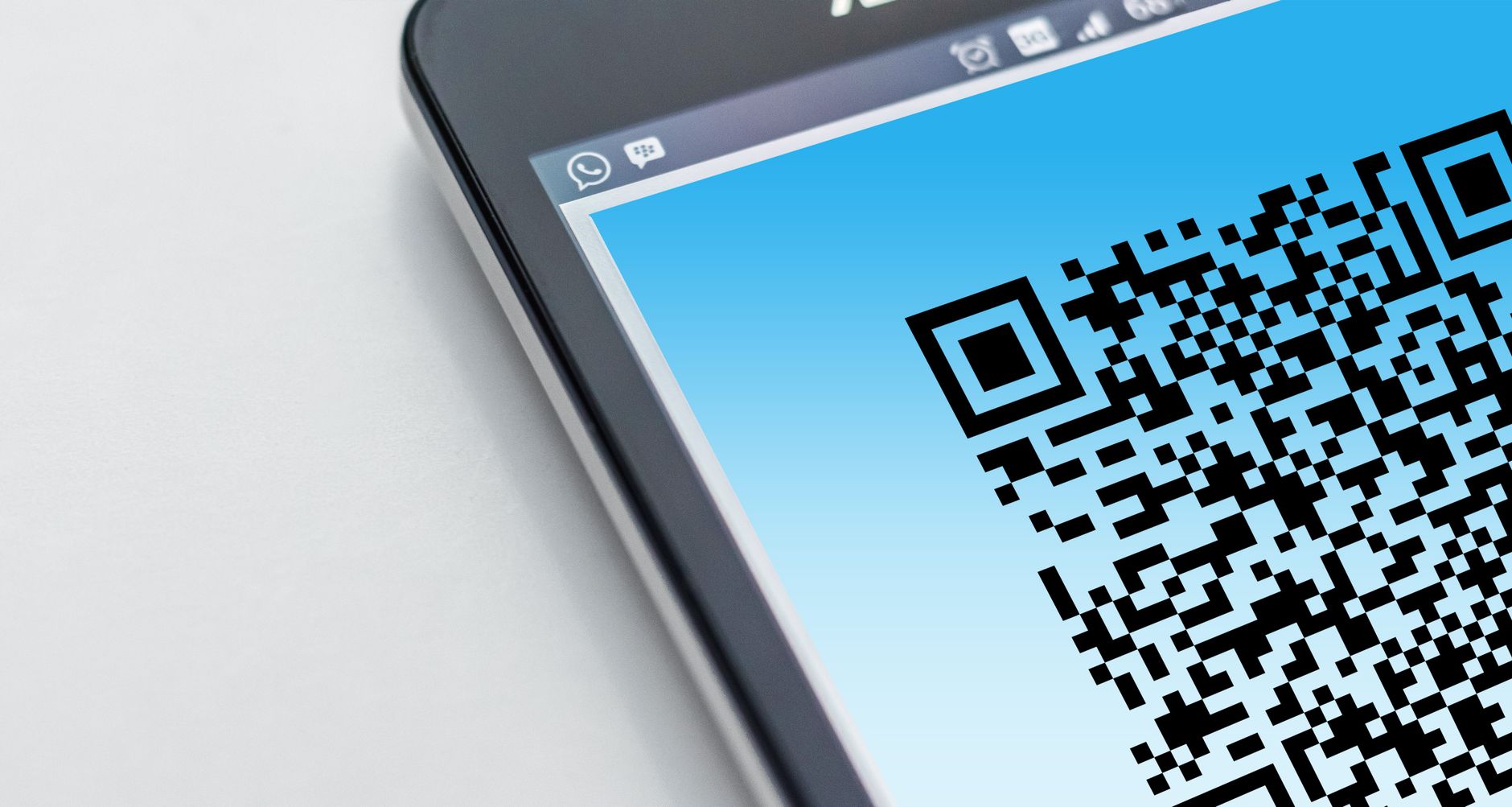
Pix is an instant payment system built and operated directly by the Central Bank of Brazil (Banco Central do Brasil, or BCB), launched in November 2020 (BCB). It moves money directly between bank accounts in real time, with no card number, no card network, and no intermediary processor required for the transfer itself. A customer pays by scanning a QR code or entering a “Pix key” (a phone number, email, tax ID, or random identifier linked to a bank account) inside their own banking app.
Adoption has been fast by any standard. Pix processed 63.4 billion transactions in 2024, moving BRL 26.4 trillion (roughly $4.6 trillion), up from 42.0 billion transactions in 2023 (Central Bank of Brazil, via PaymentsCMI, February 2025). As of that same report, 165.04 million individuals and 19.2 million businesses had registered for Pix, in a country of roughly 211 million people. That’s not a niche payment method behind cards and boleto. It’s the default.
Pix is central bank infrastructure, not a private-sector product. Banks and payment institutions connect to it under BCB rules, and the fee structures, dispute mechanisms, and technical standards come from the regulator, not from negotiation between a merchant and a processor.
How Pix payments work
A Pix transaction has three parts: the customer’s bank, the merchant’s receiving institution, and the BCB’s settlement rail (SPI, the Sistema de Pagamentos Instantâneos) connecting them.
- The merchant (or the merchant’s payment provider) generates a Pix charge, either a static or dynamic QR code, or a Copia e Cola text string.
- The customer scans the code or pastes the string into their banking app.
- The app displays the payment details, recipient, amount, and description, pulled from the charge itself rather than typed by the customer.
- The customer confirms with whatever authentication their bank uses, typically a PIN or biometric check inside the app.
- Funds move directly between the two bank accounts over SPI, settling in seconds, 24 hours a day, including weekends and holidays.
That last point is a real functional difference from Brazil’s older TED and DOC bank transfer rails, which are limited to business hours. Pix doesn’t pause for a weekend.
For merchants, the cost of accepting Pix is also meaningfully lower than card rails: about 0.33% per transaction, compared to 1.13% for debit cards and 2.34% for credit cards in Brazil (Wikipedia, citing Central Bank of Brazil fee data). Individual-to-individual Pix transfers are free for consumers.
Pix types: static QR, dynamic QR, and Pix Copia e Cola
Not every Pix charge looks the same, and the distinction matters for how you build a checkout flow.
- Static QR codes carry only the recipient’s Pix key or account details and can be reused across multiple payments. They’re suited to something like a physical storefront sign, not a one-time ecommerce checkout, because they don’t carry an amount or expiration.
- Dynamic QR codes embed the payment amount, an expiration window, and a transaction reference, and become invalid after a single use. This is the format ecommerce checkouts use, because it ties the charge to a specific order and lets you reconcile the payment against it automatically.
- Pix Copia e Cola (“copy and paste”) is the text-string equivalent of a dynamic QR code. The customer pastes it into their banking app instead of scanning, which is the format you need for phone or in-app checkout, where pointing a camera at your own screen isn’t practical.
(English-language primary sourcing on this distinction is thin. This section draws on Portuguese-language developer documentation from Neofin and Nubank, cited directly rather than through a secondary English source that doesn’t exist.)
Why Pix matters for ecommerce in Brazil
The 42% ecommerce share figure means a checkout without Pix is showing Brazilian shoppers a payment method list that doesn’t match how most of them already pay for things.
Part of that reach comes from who Pix serves that cards don’t. It’s free for consumers, settles instantly, and doesn’t require a credit card or even a bank-issued debit card, since Pix keys can attach to basic transaction accounts that are easier to open than a credit line. That combination reached unbanked and card-averse shoppers that card rails structurally can’t serve, which is a large part of why adoption outpaced cards this fast.
For a platform selling into Brazil, Pix is closer to a baseline checkout expectation than an optional local payment method, the way a US checkout without a card option would be.
Pix vs. cards, boleto, and other Brazilian payment methods
Brazil’s payment landscape has historically run on three rails: cards, boleto (a bank slip paid at an ATM, bank branch, or online banking, common for installment purchases), and, since 2020, Pix. Each behaves differently at checkout:
| Method | Settlement | Chargebacks | Typical merchant cost |
|---|---|---|---|
| Pix | Instant, 24/7 | No card-network chargeback (see MED below) | ~0.33% |
| Debit card | Same-day to 1-2 days | Standard card network disputes | ~1.13% |
| Credit card | Installment-dependent, often 30+ days to full settlement | Standard card network disputes | ~2.34% |
| Boleto | 1-3 business days after payment | No chargeback mechanism; payment is final once confirmed | Fixed fee per slip |
(Cost figures per Wikipedia, citing Central Bank of Brazil fee data.)
Pix sits closer to boleto than to cards on the dispute question: neither has a card-network-style chargeback. But the resemblance stops there. Boleto can take days to confirm and doesn’t support instant checkout confirmation. Pix does both instant settlement and instant confirmation, which is why it has been displacing boleto’s share of Brazilian ecommerce as much as it has cards.
Integrating Pix: technical requirements and payment flow
From an integration standpoint, Pix is not a card-network protocol you can plug into an existing card processing flow. It requires:
- A relationship with a Brazilian-licensed institution. Pix settles through institutions authorized by the Central Bank of Brazil, so a merchant needs a Brazilian bank or payment institution connection to receive funds. A PSP or orchestration layer with an existing Brazilian licensed connection provides this without the merchant holding a direct BCB registration.
- QR code or Copia e Cola generation for each charge, tied to your order or invoice ID for reconciliation.
- Webhook or polling-based confirmation handling, since Pix confirmations arrive asynchronously once the customer approves in their banking app, not synchronously in an API response the way a card authorization typically does.
- Refund logic that accounts for Pix’s dispute model being fundamentally different from card chargebacks (see the next section).
That’s the mechanics for a single PSP connection. What complicates it is that Pix isn’t one integration, it’s several, depending on which PSP you connect through and which Pix variant you need.
Integration challenges developers hit in practice
The gap between “Pix exists” and “we accept Pix in production” is wider than it looks, because even within a single PSP, Pix has multiple distinct implementations. dLocal, a LatAm-focused PSP and a live Orchestra integration partner, documents four separate variants (dLocal docs; dLocal, Pix Automático; dLocal press release):
- Standard Pix
- Pix Automático (recurring payments via a one-time bank authorization)
- SmartPix (tokenized, one-click repeat charges)
- Pix with Biometrics (face or fingerprint confirmation inside checkout)
Each is a separate technical integration path with its own auth flow and use case, not a checkbox on top of one Pix connection. A developer scoping “add Pix support” is really scoping which variant the product needs, and that answer can change as it grows from one-time checkout into recurring billing.
This isn’t unique to Orchestra’s view of the market. Gr4vy, a competing orchestration platform, added Pix Automático by integrating dLocal rather than building a direct Central Bank connection (The Paypers). Even orchestration-category platforms route Pix through a regional PSP partner; there’s no shortcut around the underlying PSP relationship, only a difference in how much of it a merchant manages directly.
The other thing worth knowing before you scope this: Pix has no card-network-style chargeback mechanism. Because it’s a push payment, the customer authorizes and sends funds directly, the Central Bank instead operates MED (Mecanismo Especial de Devolução, or Special Return Mechanism), a fraud-and-scam-specific reversal process. A payer can flag a transaction as fraudulent, the recipient’s bank has to block the disputed funds, and both banks have up to 11 days to resolve the case, inside an 80-day filing window from the original transaction (Stripe; Vixio Payments Compliance). MED doesn’t cover commercial disputes, buyer’s remorse, or a payment sent to the wrong Pix key. You lose card-style chargeback overhead, but you need bank-initiated reconciliation logic that doesn’t resemble your existing refund code.
Accepting Pix through a payment orchestration platform
None of the integration work above goes away because you route through an orchestration layer. What changes is who owns the maintenance when a PSP updates its Pix implementation or changes a webhook format: the orchestration layer’s connection to dLocal (or another Brazil-capable PSP), not your application code.
Orchestra doesn’t operate Pix directly or hold a Central Bank of Brazil registration itself. Its model is to route each local payment method through whichever PSP in its network already supports it, rather than build a direct rail connection of its own, the same pattern used for every other local payment method. dLocal, a confirmed Orchestra integration partner, is one PSP whose own documentation lists Pix support; Orchestra’s public integration pages don’t itemize which payment methods are live behind each PSP connection, so whether Pix specifically is routable through a given PSP connection today is a question for Orchestra directly, not something this article can confirm from public sources. If you’re already running Stripe or Adyen for card processing elsewhere, adding a Brazil-capable PSP doesn’t require ripping out what already works. That’s the same coexistence question that comes up with any new market: you configure the new connection rather than rewrite your existing checkout code around it.
This is also where the infrastructure cost of market-specific payment methods compounds. Pix is Brazil’s answer to instant payments; other markets have their own equivalents (UPI in India, PromptPay in Thailand), each with their own regulator, their own settlement rail, and their own dispute process. Maintaining direct integrations to each one multiplies your integration surface every time a new market comes up on the roadmap. Routing them through one orchestration layer doesn’t eliminate the underlying complexity of each rail, but it does mean that complexity lives in one place instead of scattered across every market-specific integration your team has shipped.
Frequently Asked Questions
What is Pix?
Pix is Brazil’s instant payment system, launched by the Central Bank of Brazil (Banco Central do Brasil) in November 2020. It lets consumers and businesses transfer money or pay for purchases in seconds, at any time, directly between bank accounts.
Is Pix free to use?
Pix is free for individual consumers making payments and transfers. Businesses typically pay a fee to their bank or payment provider per transaction, around 0.33% for merchant Pix acceptance, lower than debit or credit card fees in Brazil (Wikipedia, citing Central Bank of Brazil fee data).
How fast are Pix payments?
Pix transactions settle in real time, typically within seconds, 24 hours a day including weekends and holidays. This differs from Brazil’s older TED and DOC bank transfer rails, which are limited to business hours.
What is Pix Copia e Cola?
Pix Copia e Cola (“copy and paste”) is a text-string version of a Pix payment request that a customer can paste into their banking app instead of scanning a QR code, used mainly for phone or in-app checkout flows where scanning isn’t practical.
Do I need a Brazilian entity to accept Pix?
Pix payments settle through institutions authorized by the Central Bank of Brazil, so a merchant needs a Brazilian bank or payment institution relationship to receive funds. A PSP or orchestration platform with an existing Brazilian licensed connection can provide this without the merchant holding a direct Central Bank registration.
How does Pix differ from a card payment?
Pix moves money directly between bank accounts via QR code or key, with no card number, no card network, and no chargeback mechanism. Authentication happens inside the customer’s own banking app rather than at the merchant’s checkout.
Does Pix have chargebacks or refunds?
No card-network-style chargeback exists for Pix. Instead, the Central Bank operates MED (Mecanismo Especial de Devolução), a fraud- and scam-specific reversal process: a payer can flag a transaction, the recipient’s bank must block the disputed funds, and both banks have up to 11 days to resolve the case. MED does not cover commercial disputes, buyer’s remorse, or payments sent to the wrong Pix key.
Why do so many Brazilian shoppers use Pix instead of cards?
Pix is free for consumers, settles instantly, and works without a credit card or bank card at all, so it reached unbanked and card-averse shoppers that card rails don’t serve. It held 42% of Brazilian ecommerce transaction volume in 2025, ahead of credit cards (EBANX/PCMI, 2025).